✨ New Arrivals Just Dropped!Explore

1 / 2
Group Lot of 17x Canada Bank Tokens About Good to Fine, 17pcs
Group Lot of 17x Canada Bank Tokens About Good to Fine, 17pcs
Since their formation in the 18th century, the Canadian colonies under Britain had suffered a chronic shortage of small coins. The British did little to alleviate this, shipping occasional lots of worn-out coppers overseas that quickly dwindled as colonists struggled to do commerce. By 1820, any coin that was roughly the right size could pass for a halfpenny -- be it English, American, French, Spanish, or anything in between.
Enter: the bank token. While the British would not supply the needed coinage, banks -- including the Bank of Montreal, the City Bank, La Banque du Peuple, and the Quebec Bank -- were permitted to issue penny and halfpenny tokens that were similar in weight and size to British copper coins.
When the colonies united into the Province of Canada in 1858, the decimal system was adopted based on the American dollar. Tokens promptly died out. They remain interesting and sought-after collector's pieces!
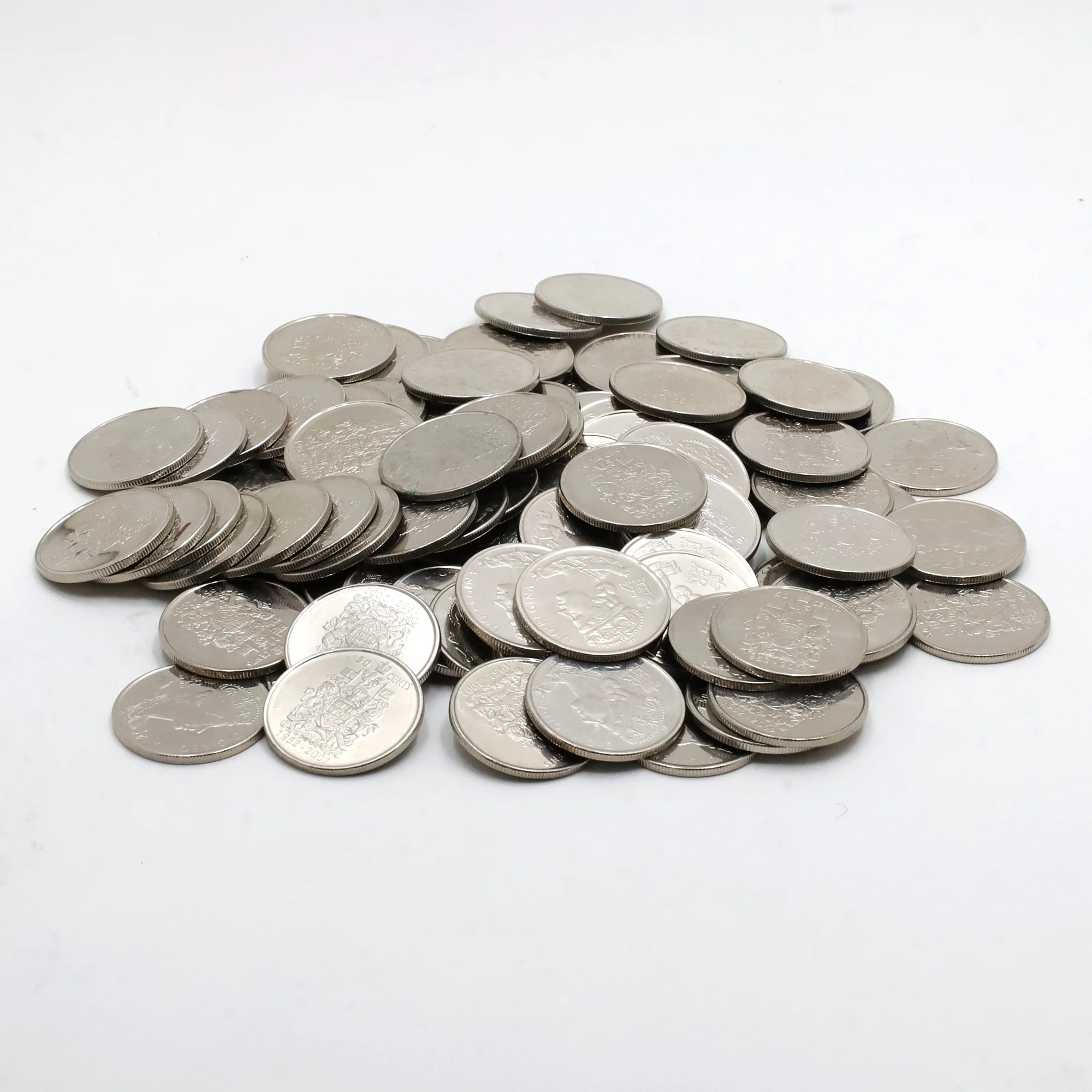
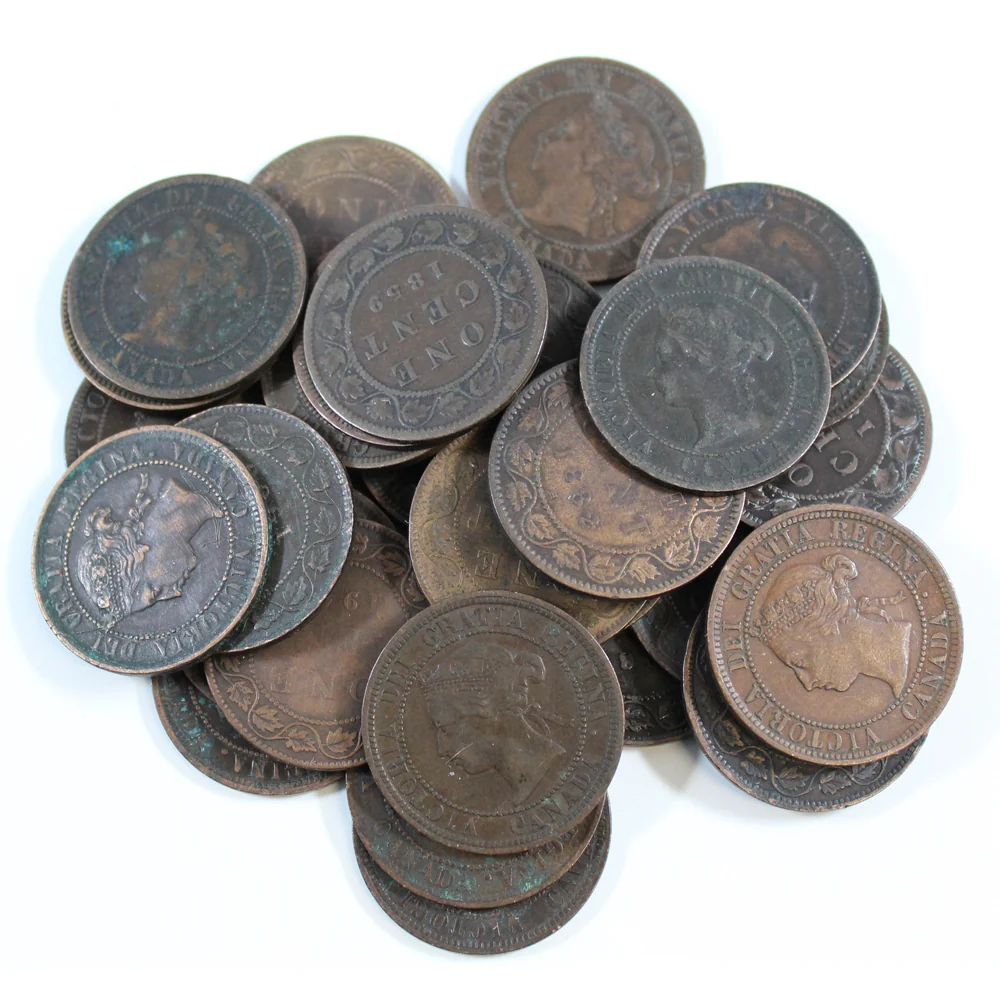
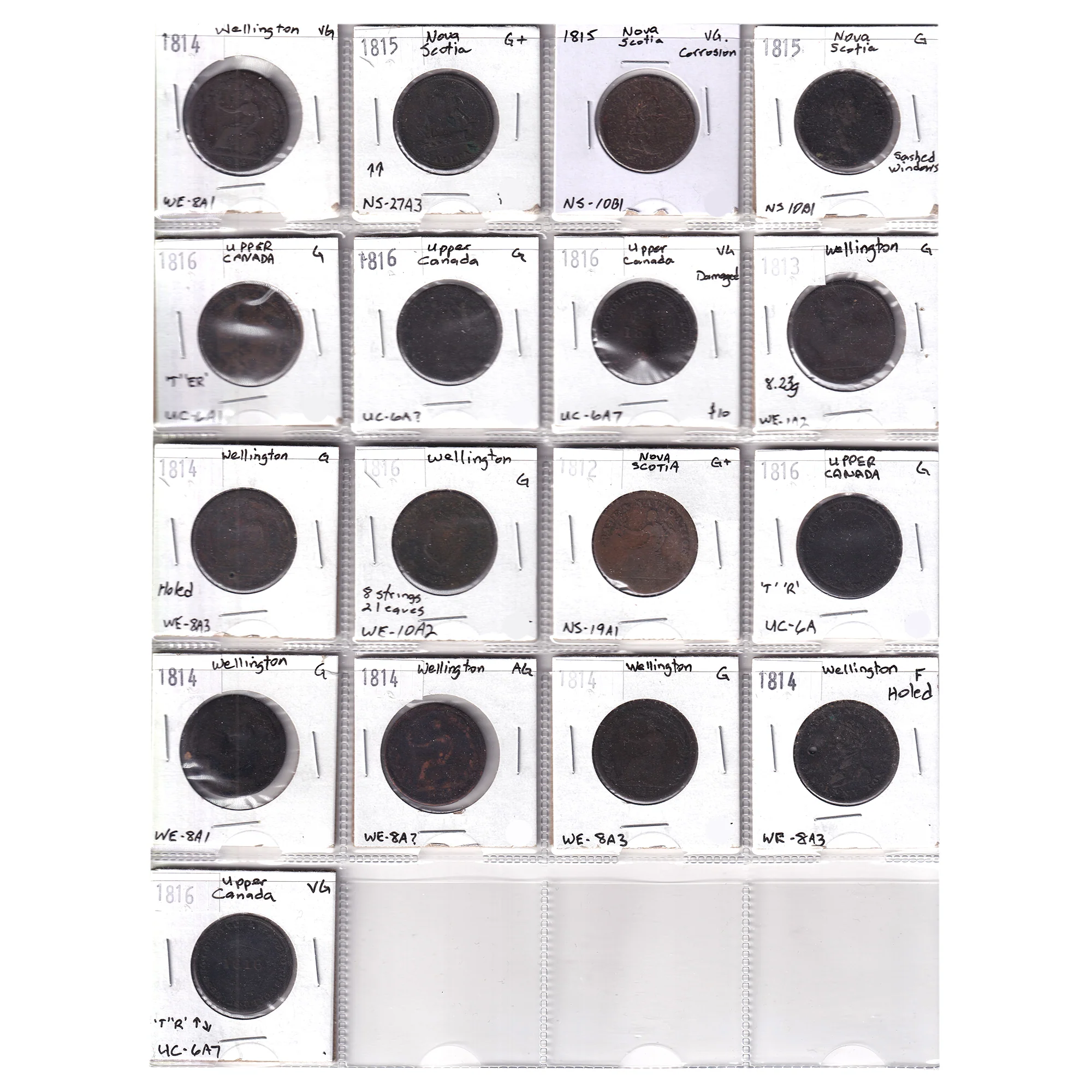
This lot includes seventeen bank tokens from Upper Canada, Lower Canada, and Nova Scotia. There are a fair number of Wellington tokens included; tokens popular in Lower Canada that featured a bust of the Duke of Wellington, who had achieved celebrity status across the British Empire for his military victories. Please note that history has loved these tokens well; they exhibit corrosion, holes, heavy wear, and other damage from use and circulation. See image for details.
Since their formation in the 18th century, the Canadian colonies under Britain had suffered a chronic shortage of small coins. The British did little to alleviate this, shipping occasional lots of worn-out coppers overseas that quickly dwindled as colonists struggled to do commerce. By 1820, any coin that was roughly the right size could pass for a halfpenny -- be it English, American, French, Spanish, or anything in between.
Enter: the bank token. While the British would not supply the needed coinage, banks -- including the Bank of Montreal, the City Bank, La Banque du Peuple, and the Quebec Bank -- were permitted to issue penny and halfpenny tokens that were similar in weight and size to British copper coins.
When the colonies united into the Province of Canada in 1858, the decimal system was adopted based on the American dollar. Tokens promptly died out. They remain interesting and sought-after collector's pieces!
This lot includes seventeen bank tokens from Upper Canada, Lower Canada, and Nova Scotia. There are a fair number of Wellington tokens included; tokens popular in Lower Canada that featured a bust of the Duke of Wellington, who had achieved celebrity status across the British Empire for his military victories. Please note that history has loved these tokens well; they exhibit corrosion, holes, heavy wear, and other damage from use and circulation. See image for details.
Group Lot of 17x Canada Bank Tokens About Good to Fine, 17pcs
Since their formation in the 18th century, the Canadian colonies under Britain had suffered a chronic shortage of small coins. The British did little to alleviate this, shipping occasional lots of worn-out coppers overseas that quickly dwindled as colonists struggled to do commerce. By 1820, any coin that was roughly the right size could pass for a halfpenny -- be it English, American, French, Spanish, or anything in between.
Enter: the bank token. While the British would not supply the needed coinage, banks -- including the Bank of Montreal, the City Bank, La Banque du Peuple, and the Quebec Bank -- were permitted to issue penny and halfpenny tokens that were similar in weight and size to British copper coins.
When the colonies united into the Province of Canada in 1858, the decimal system was adopted based on the American dollar. Tokens promptly died out. They remain interesting and sought-after collector's pieces!
This lot includes seventeen bank tokens from Upper Canada, Lower Canada, and Nova Scotia. There are a fair number of Wellington tokens included; tokens popular in Lower Canada that featured a bust of the Duke of Wellington, who had achieved celebrity status across the British Empire for his military victories. Please note that history has loved these tokens well; they exhibit corrosion, holes, heavy wear, and other damage from use and circulation. See image for details.
Since their formation in the 18th century, the Canadian colonies under Britain had suffered a chronic shortage of small coins. The British did little to alleviate this, shipping occasional lots of worn-out coppers overseas that quickly dwindled as colonists struggled to do commerce. By 1820, any coin that was roughly the right size could pass for a halfpenny -- be it English, American, French, Spanish, or anything in between.
Enter: the bank token. While the British would not supply the needed coinage, banks -- including the Bank of Montreal, the City Bank, La Banque du Peuple, and the Quebec Bank -- were permitted to issue penny and halfpenny tokens that were similar in weight and size to British copper coins.
When the colonies united into the Province of Canada in 1858, the decimal system was adopted based on the American dollar. Tokens promptly died out. They remain interesting and sought-after collector's pieces!
This lot includes seventeen bank tokens from Upper Canada, Lower Canada, and Nova Scotia. There are a fair number of Wellington tokens included; tokens popular in Lower Canada that featured a bust of the Duke of Wellington, who had achieved celebrity status across the British Empire for his military victories. Please note that history has loved these tokens well; they exhibit corrosion, holes, heavy wear, and other damage from use and circulation. See image for details.
$36.31
Group Lot of 17x Canada Bank Tokens About Good to Fine, 17pcs—
$36.31
Description
Group Lot of 17x Canada Bank Tokens About Good to Fine, 17pcs
Since their formation in the 18th century, the Canadian colonies under Britain had suffered a chronic shortage of small coins. The British did little to alleviate this, shipping occasional lots of worn-out coppers overseas that quickly dwindled as colonists struggled to do commerce. By 1820, any coin that was roughly the right size could pass for a halfpenny -- be it English, American, French, Spanish, or anything in between.
Enter: the bank token. While the British would not supply the needed coinage, banks -- including the Bank of Montreal, the City Bank, La Banque du Peuple, and the Quebec Bank -- were permitted to issue penny and halfpenny tokens that were similar in weight and size to British copper coins.
When the colonies united into the Province of Canada in 1858, the decimal system was adopted based on the American dollar. Tokens promptly died out. They remain interesting and sought-after collector's pieces!
This lot includes seventeen bank tokens from Upper Canada, Lower Canada, and Nova Scotia. There are a fair number of Wellington tokens included; tokens popular in Lower Canada that featured a bust of the Duke of Wellington, who had achieved celebrity status across the British Empire for his military victories. Please note that history has loved these tokens well; they exhibit corrosion, holes, heavy wear, and other damage from use and circulation. See image for details.
Since their formation in the 18th century, the Canadian colonies under Britain had suffered a chronic shortage of small coins. The British did little to alleviate this, shipping occasional lots of worn-out coppers overseas that quickly dwindled as colonists struggled to do commerce. By 1820, any coin that was roughly the right size could pass for a halfpenny -- be it English, American, French, Spanish, or anything in between.
Enter: the bank token. While the British would not supply the needed coinage, banks -- including the Bank of Montreal, the City Bank, La Banque du Peuple, and the Quebec Bank -- were permitted to issue penny and halfpenny tokens that were similar in weight and size to British copper coins.
When the colonies united into the Province of Canada in 1858, the decimal system was adopted based on the American dollar. Tokens promptly died out. They remain interesting and sought-after collector's pieces!
This lot includes seventeen bank tokens from Upper Canada, Lower Canada, and Nova Scotia. There are a fair number of Wellington tokens included; tokens popular in Lower Canada that featured a bust of the Duke of Wellington, who had achieved celebrity status across the British Empire for his military victories. Please note that history has loved these tokens well; they exhibit corrosion, holes, heavy wear, and other damage from use and circulation. See image for details.