✨ New Arrivals Just Dropped!Explore

1 / 2
1702-1714 Queen Anne Honour Medallion
1702-1714 Queen Anne Honour Medallion
Queen Anne (1665-1714) was the last of the Stuart monarchs, daughter of James II and niece of Charles II. A devout Anglican who despised Roman Catholics, she succeeded her brother-in-law William III in 1702. Her success as a monarch was somewhat mixed; Britain was strengthened by victory in the War of Spanish Succession, with the capture of Gibraltar and the signing of the Treaty of Utrecht. The treaty gave Britain control of large tracts of land in modern Canada and control over the slave trade to Spanish America, which strengthened it massively (at the expense of immense human suffering). She comissioned churches, music, and works of art, and shifted the cultivation of gardens into a more naturalistic style. Anne, however, was also constantly struggling with the British political parties, and her chronic ill health meant she was forced to rely heavily on her ministers. She suffered thirteen miscarriages, and of her five surviving children, the longest-lived died age just 11. This saw succession pass to the Hanovers upon her death, and the beginning of the Georgian Period.
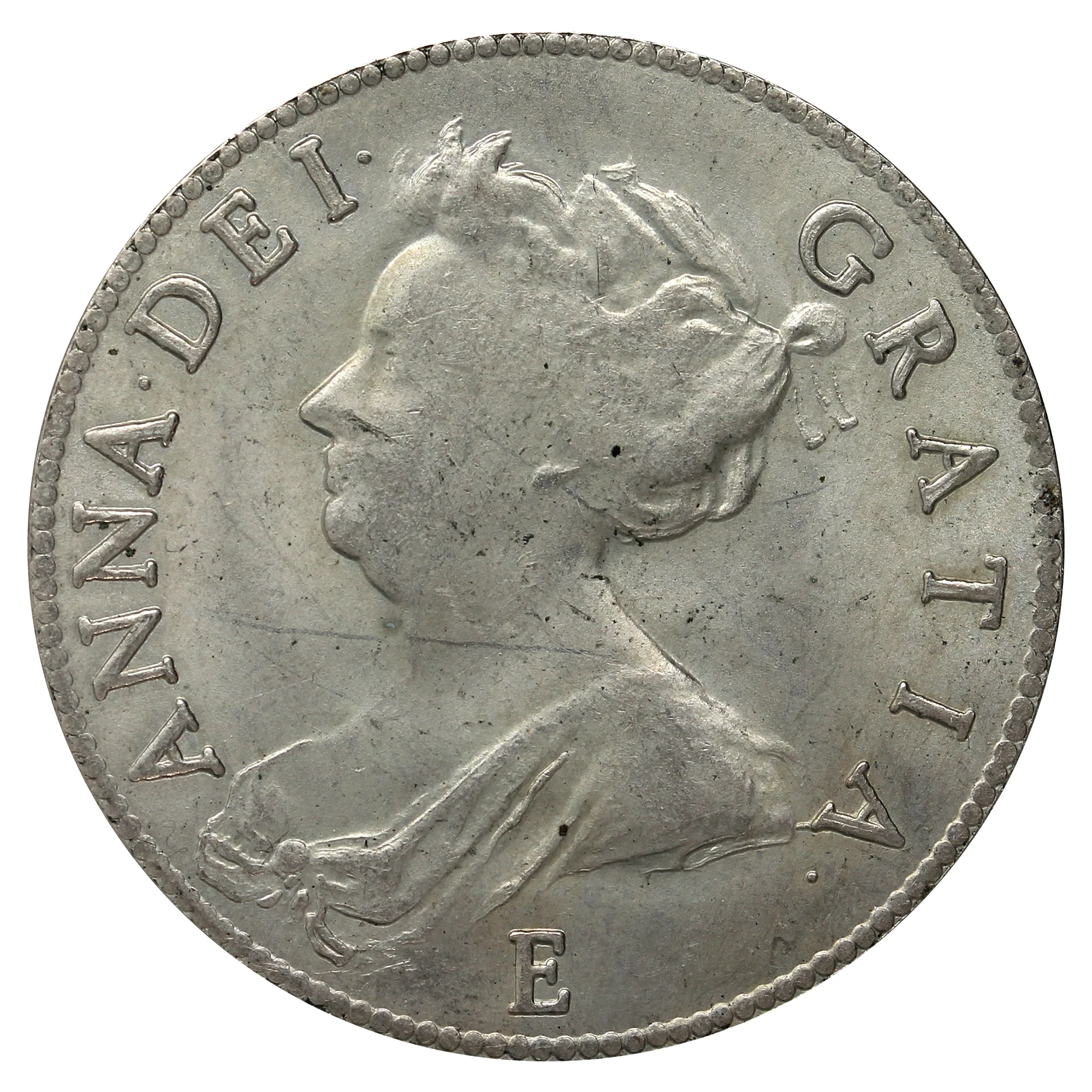
This token, minted sometime after Anne's death in 1714, features her profile on the obverse and a simple inscription, "ANNE 1702-1714, WR," on the reverse.
Queen Anne (1665-1714) was the last of the Stuart monarchs, daughter of James II and niece of Charles II. A devout Anglican who despised Roman Catholics, she succeeded her brother-in-law William III in 1702. Her success as a monarch was somewhat mixed; Britain was strengthened by victory in the War of Spanish Succession, with the capture of Gibraltar and the signing of the Treaty of Utrecht. The treaty gave Britain control of large tracts of land in modern Canada and control over the slave trade to Spanish America, which strengthened it massively (at the expense of immense human suffering). She comissioned churches, music, and works of art, and shifted the cultivation of gardens into a more naturalistic style. Anne, however, was also constantly struggling with the British political parties, and her chronic ill health meant she was forced to rely heavily on her ministers. She suffered thirteen miscarriages, and of her five surviving children, the longest-lived died age just 11. This saw succession pass to the Hanovers upon her death, and the beginning of the Georgian Period.
This token, minted sometime after Anne's death in 1714, features her profile on the obverse and a simple inscription, "ANNE 1702-1714, WR," on the reverse.
1702-1714 Queen Anne Honour Medallion
Queen Anne (1665-1714) was the last of the Stuart monarchs, daughter of James II and niece of Charles II. A devout Anglican who despised Roman Catholics, she succeeded her brother-in-law William III in 1702. Her success as a monarch was somewhat mixed; Britain was strengthened by victory in the War of Spanish Succession, with the capture of Gibraltar and the signing of the Treaty of Utrecht. The treaty gave Britain control of large tracts of land in modern Canada and control over the slave trade to Spanish America, which strengthened it massively (at the expense of immense human suffering). She comissioned churches, music, and works of art, and shifted the cultivation of gardens into a more naturalistic style. Anne, however, was also constantly struggling with the British political parties, and her chronic ill health meant she was forced to rely heavily on her ministers. She suffered thirteen miscarriages, and of her five surviving children, the longest-lived died age just 11. This saw succession pass to the Hanovers upon her death, and the beginning of the Georgian Period.
This token, minted sometime after Anne's death in 1714, features her profile on the obverse and a simple inscription, "ANNE 1702-1714, WR," on the reverse.
Queen Anne (1665-1714) was the last of the Stuart monarchs, daughter of James II and niece of Charles II. A devout Anglican who despised Roman Catholics, she succeeded her brother-in-law William III in 1702. Her success as a monarch was somewhat mixed; Britain was strengthened by victory in the War of Spanish Succession, with the capture of Gibraltar and the signing of the Treaty of Utrecht. The treaty gave Britain control of large tracts of land in modern Canada and control over the slave trade to Spanish America, which strengthened it massively (at the expense of immense human suffering). She comissioned churches, music, and works of art, and shifted the cultivation of gardens into a more naturalistic style. Anne, however, was also constantly struggling with the British political parties, and her chronic ill health meant she was forced to rely heavily on her ministers. She suffered thirteen miscarriages, and of her five surviving children, the longest-lived died age just 11. This saw succession pass to the Hanovers upon her death, and the beginning of the Georgian Period.
This token, minted sometime after Anne's death in 1714, features her profile on the obverse and a simple inscription, "ANNE 1702-1714, WR," on the reverse.
$3.60
1702-1714 Queen Anne Honour Medallion—
$3.60
Description
1702-1714 Queen Anne Honour Medallion
Queen Anne (1665-1714) was the last of the Stuart monarchs, daughter of James II and niece of Charles II. A devout Anglican who despised Roman Catholics, she succeeded her brother-in-law William III in 1702. Her success as a monarch was somewhat mixed; Britain was strengthened by victory in the War of Spanish Succession, with the capture of Gibraltar and the signing of the Treaty of Utrecht. The treaty gave Britain control of large tracts of land in modern Canada and control over the slave trade to Spanish America, which strengthened it massively (at the expense of immense human suffering). She comissioned churches, music, and works of art, and shifted the cultivation of gardens into a more naturalistic style. Anne, however, was also constantly struggling with the British political parties, and her chronic ill health meant she was forced to rely heavily on her ministers. She suffered thirteen miscarriages, and of her five surviving children, the longest-lived died age just 11. This saw succession pass to the Hanovers upon her death, and the beginning of the Georgian Period.
This token, minted sometime after Anne's death in 1714, features her profile on the obverse and a simple inscription, "ANNE 1702-1714, WR," on the reverse.
Queen Anne (1665-1714) was the last of the Stuart monarchs, daughter of James II and niece of Charles II. A devout Anglican who despised Roman Catholics, she succeeded her brother-in-law William III in 1702. Her success as a monarch was somewhat mixed; Britain was strengthened by victory in the War of Spanish Succession, with the capture of Gibraltar and the signing of the Treaty of Utrecht. The treaty gave Britain control of large tracts of land in modern Canada and control over the slave trade to Spanish America, which strengthened it massively (at the expense of immense human suffering). She comissioned churches, music, and works of art, and shifted the cultivation of gardens into a more naturalistic style. Anne, however, was also constantly struggling with the British political parties, and her chronic ill health meant she was forced to rely heavily on her ministers. She suffered thirteen miscarriages, and of her five surviving children, the longest-lived died age just 11. This saw succession pass to the Hanovers upon her death, and the beginning of the Georgian Period.
This token, minted sometime after Anne's death in 1714, features her profile on the obverse and a simple inscription, "ANNE 1702-1714, WR," on the reverse.